Pole Tent vs. Frame Tent vs. High Peak: What's the Difference?

Once you know the size you need, you'll need to choose a tent style. Each type has a different look, different setup requirements, and works better in certain situations.

Pole Tents

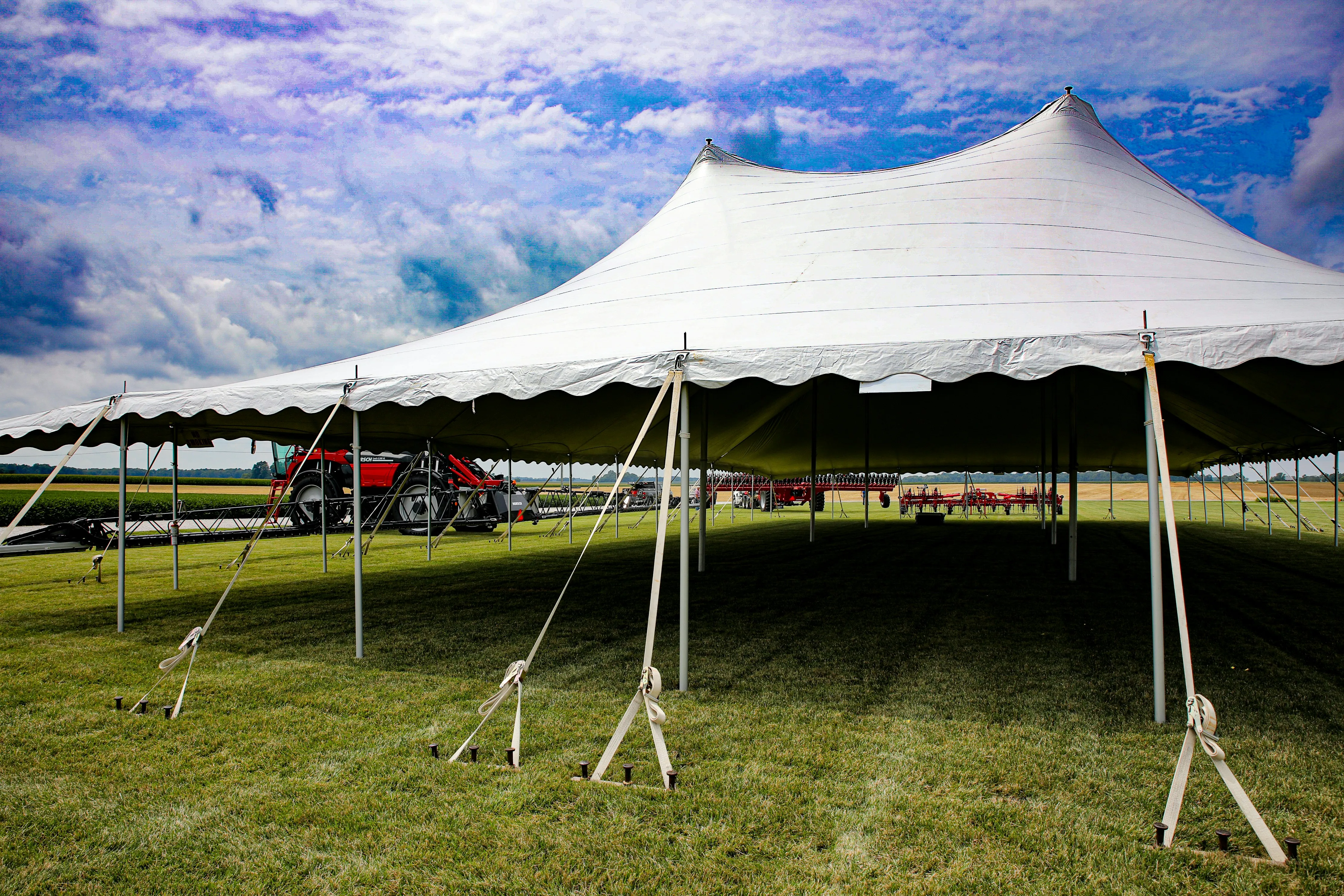
Pole tents use center poles and perimeter stakes driven into the ground to create their structure. The center poles create a dramatic, swooping roofline that looks beautiful in photos and has a classic, romantic outdoor-wedding feel.

Best for: Open grass fields, farms, and large backyards where you have plenty of staking room and don't mind the center pole being part of the aesthetic. The poles do take up floor space, so factor that into your layout.

Not ideal for: Patios, parking lots, or anywhere you can't drive stakes into the ground.

Frame Tents

Frame tents are freestanding structures supported entirely by an internal aluminum frame. No center poles, no stakes required. The entire floor space is open and usable, which makes layout much more flexible.

Best for: Patios, hardscaped surfaces, venues where staking isn't allowed, and events where you want maximum open floor space. Also a cleaner, more modern look than a pole tent.

Not ideal for: Situations where the classic, flowing roofline of a pole tent is part of the visual you're going for.

High Peak Frame Tents

High peak tents are a variation of the frame tent with a dramatically elevated center point that creates a peak in the roofline. You get the freestanding, no-center-pole benefits of a frame tent combined with a more elegant silhouette.

Best for: Weddings and upscale events where aesthetics matter as much as function. The high peak creates a grand, sophisticated look from the outside and feels more spacious inside.

Minnesota-Specific Considerations

Tent sizing isn't just about guest count. In Minnesota, weather plays a real role in the decisions you make.

Wind: Pole tents require staking and are generally more stable in wind when properly installed. Frame tents need to be properly weighted or staked on hard surfaces. For any outdoor event in Minnesota, sidewalls are worth having on hand — even if you don't plan to use them.

Rain: All of our tents are made from fire-retardant, UV-resistant vinyl that handles Minnesota rain without issue. The bigger concern is drainage around the tent perimeter — make sure your site has good drainage so you're not standing in puddles.

Heat: July and August in Minnesota can be genuinely hot under a tent. A 20×60 tent full of 96 people generates a lot of body heat. Misting fans and strategic sidewall placement (open sides facing the breeze) help significantly. We carry misting fans if you want to add them.

Cold: September and October weddings in Minnesota can drop to the 40s in the evening. Tent heaters and solid sidewalls turn a fall tent wedding from uncomfortable to cozy. Plan for it rather than hoping for warm weather.

What Comes With Your Tent Rental

A tent alone doesn't make a reception. Our wedding tent packages are built around each tent size — they include the right number of 5ft round tables, banquet tables, chairs, linens, lighting, and a bar so you're not piecing everything together separately.

If you want to build a custom order instead, our full catalog has everything you need.

Call or Text (651) 661-4499 With Questions